Going Tiki
2022
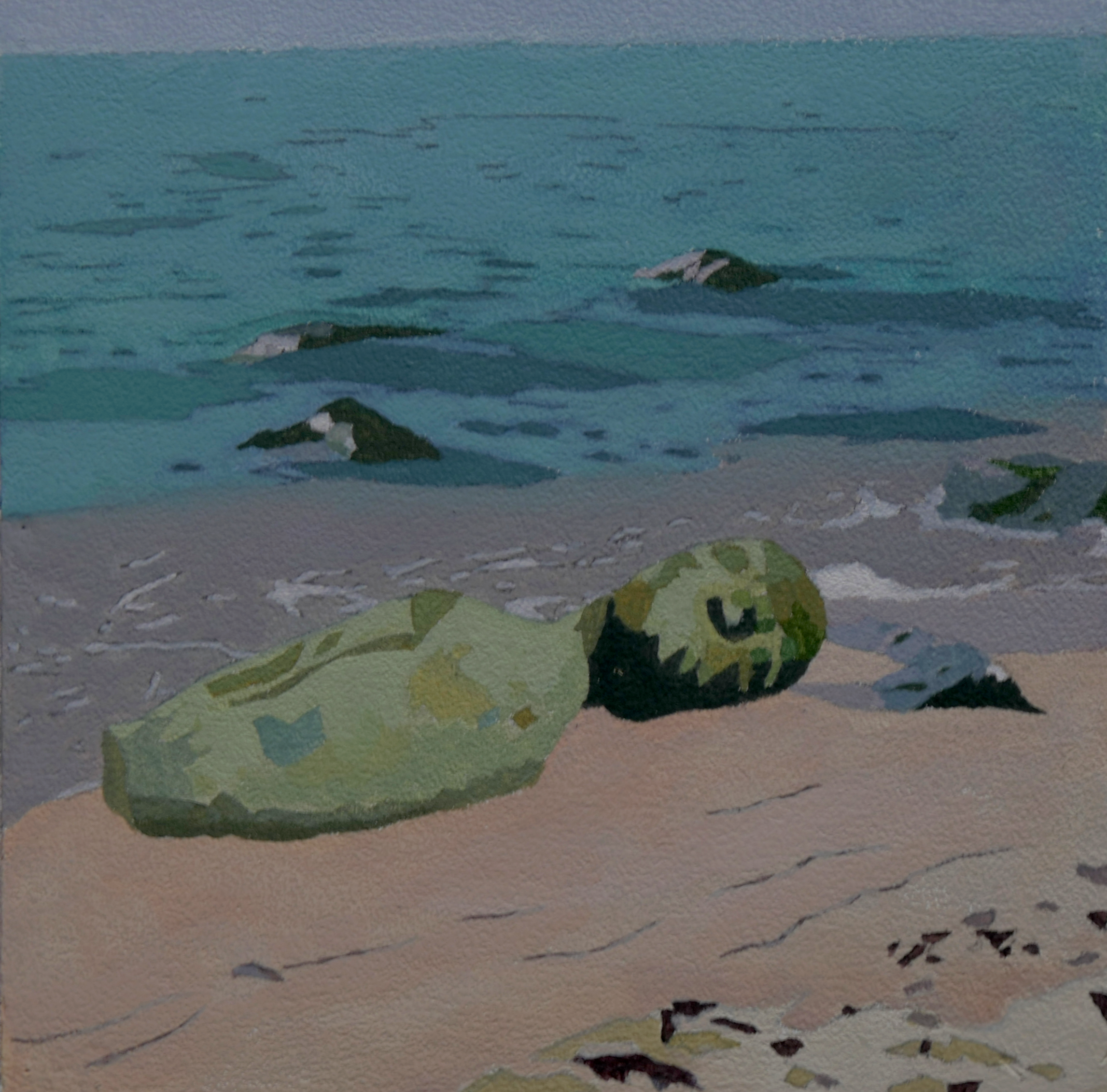
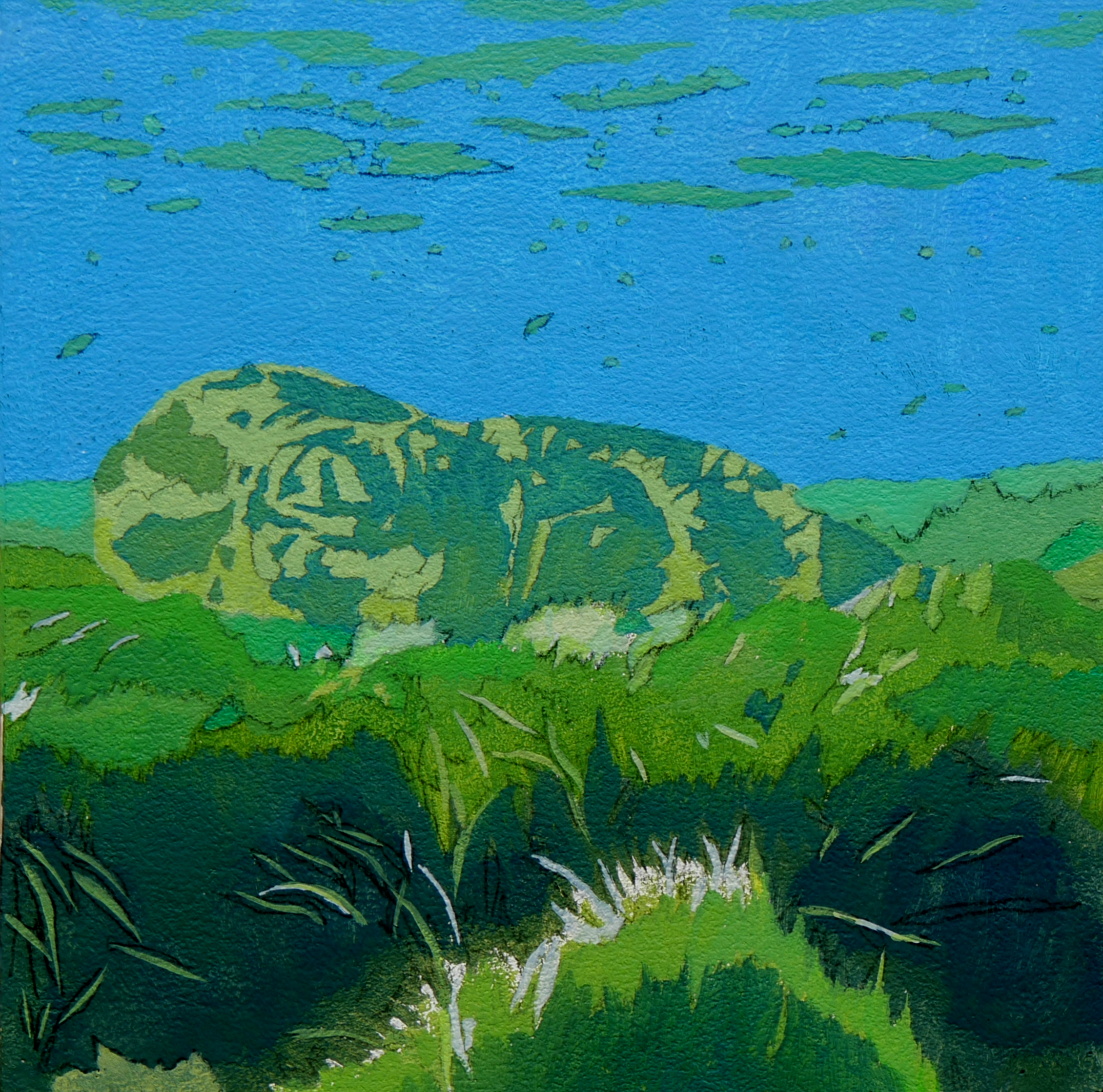
10 pieces. Oil on wood. 20 x 20 cm.
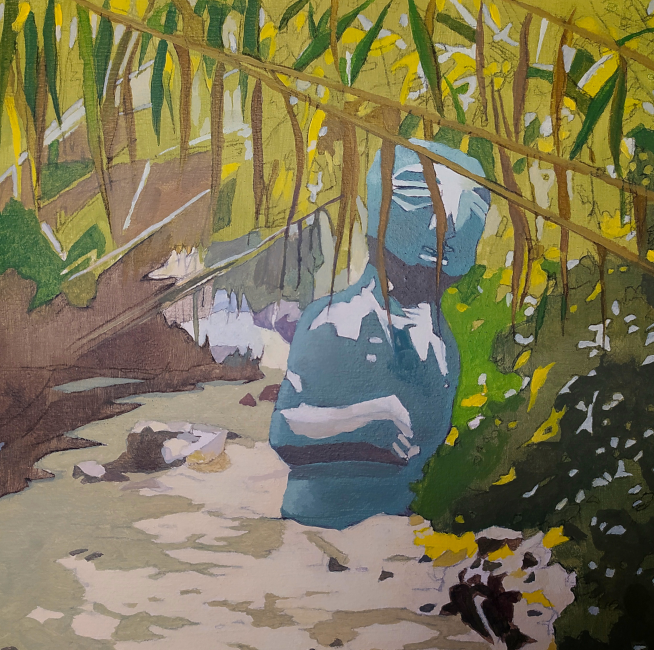
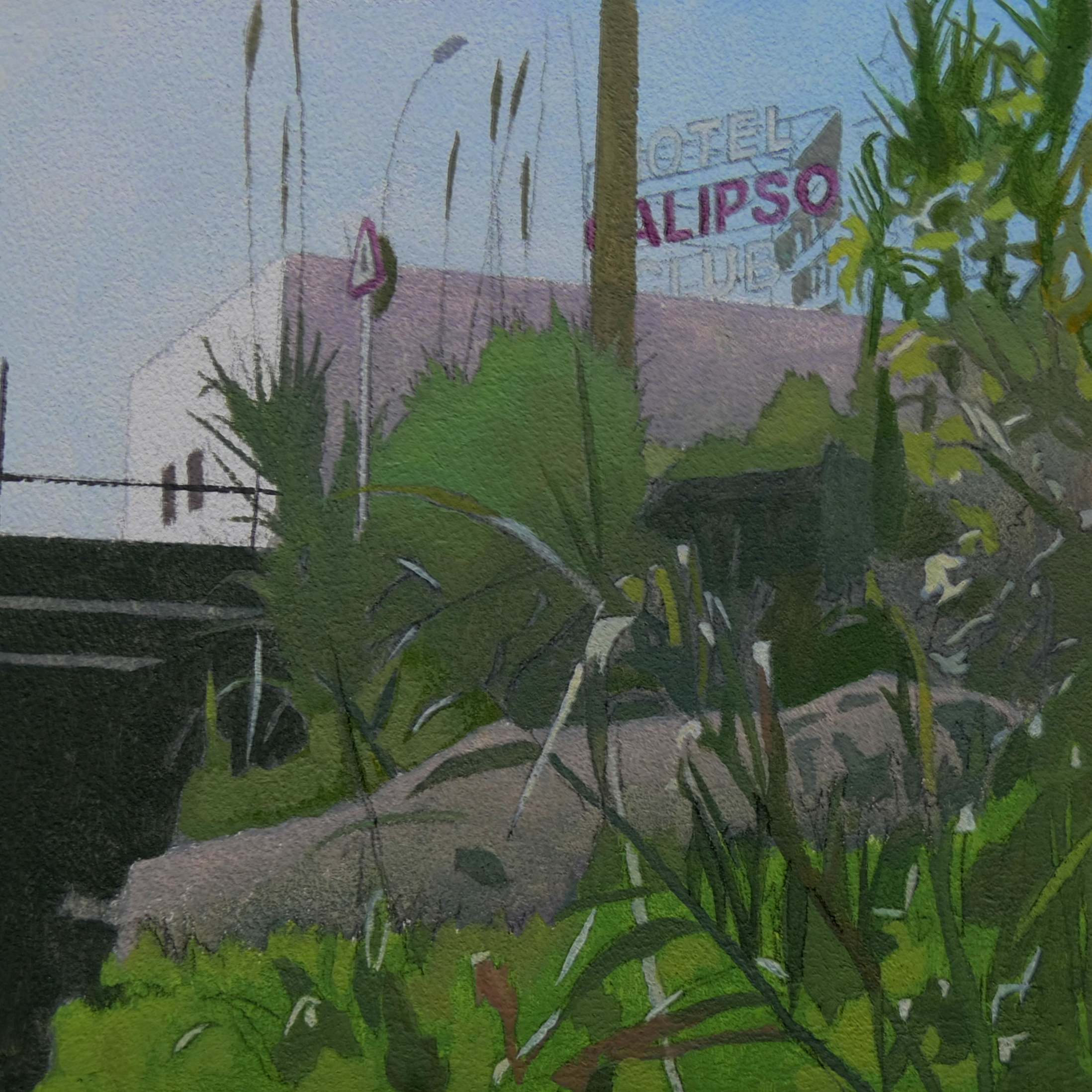
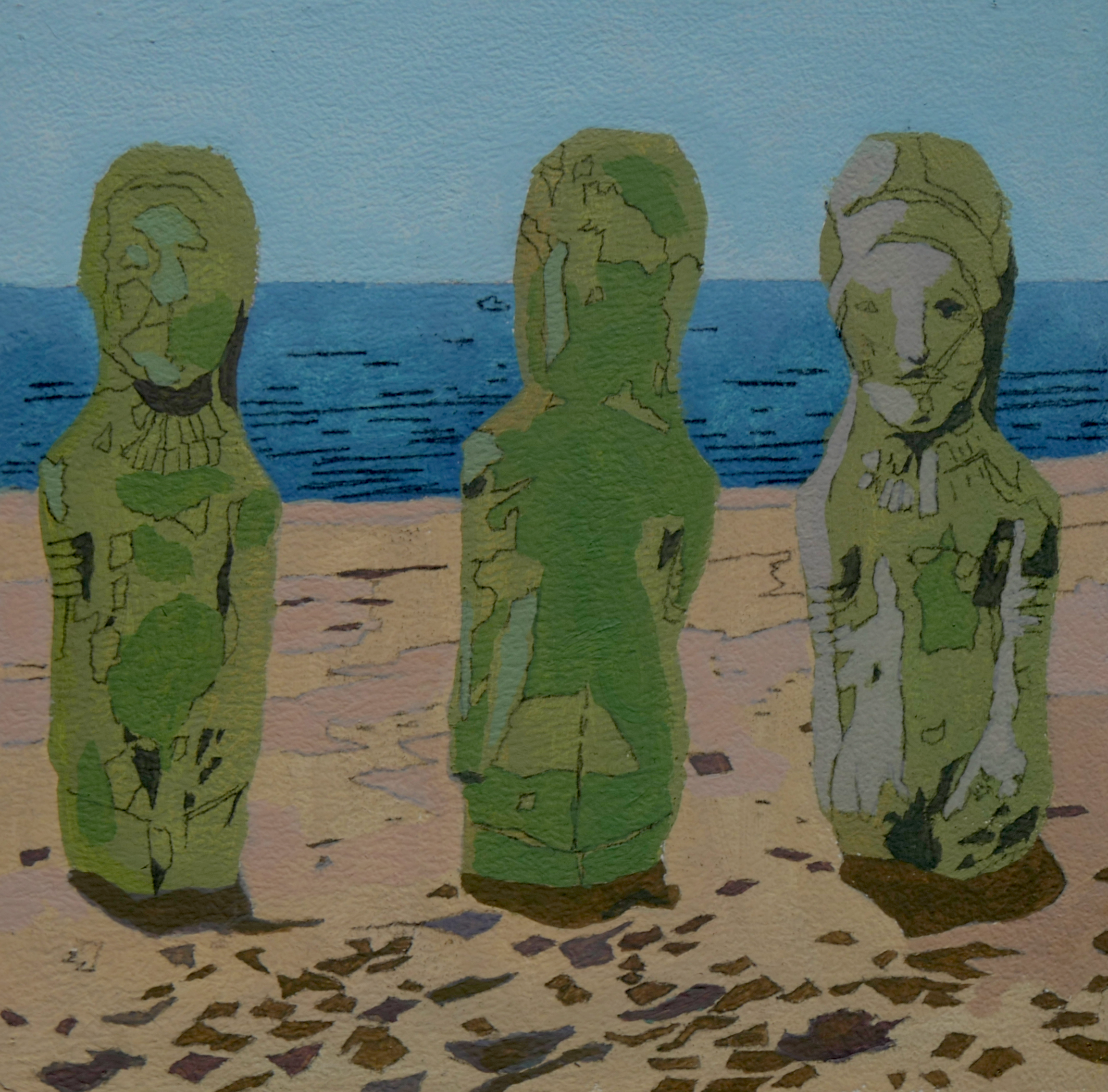
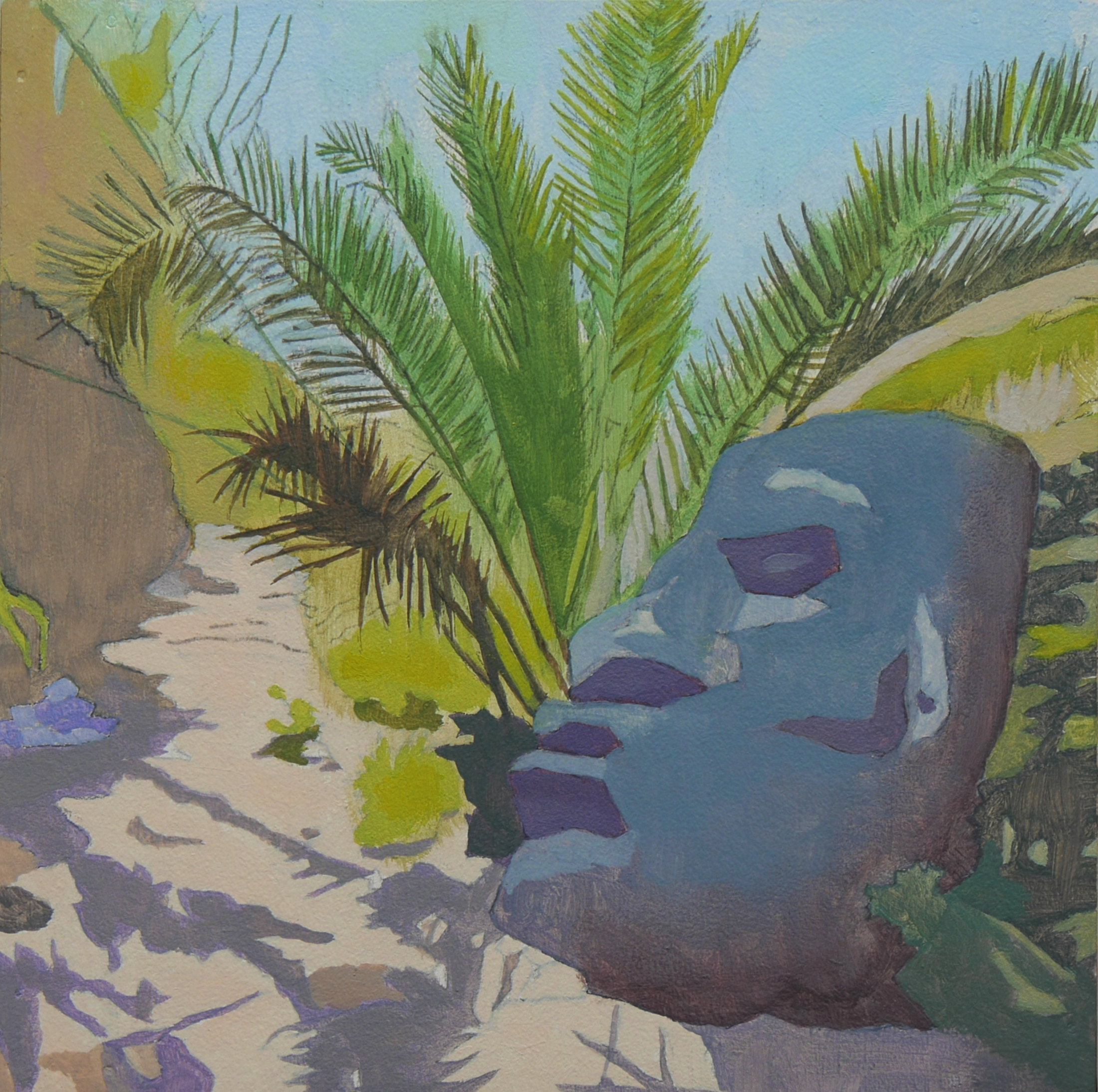
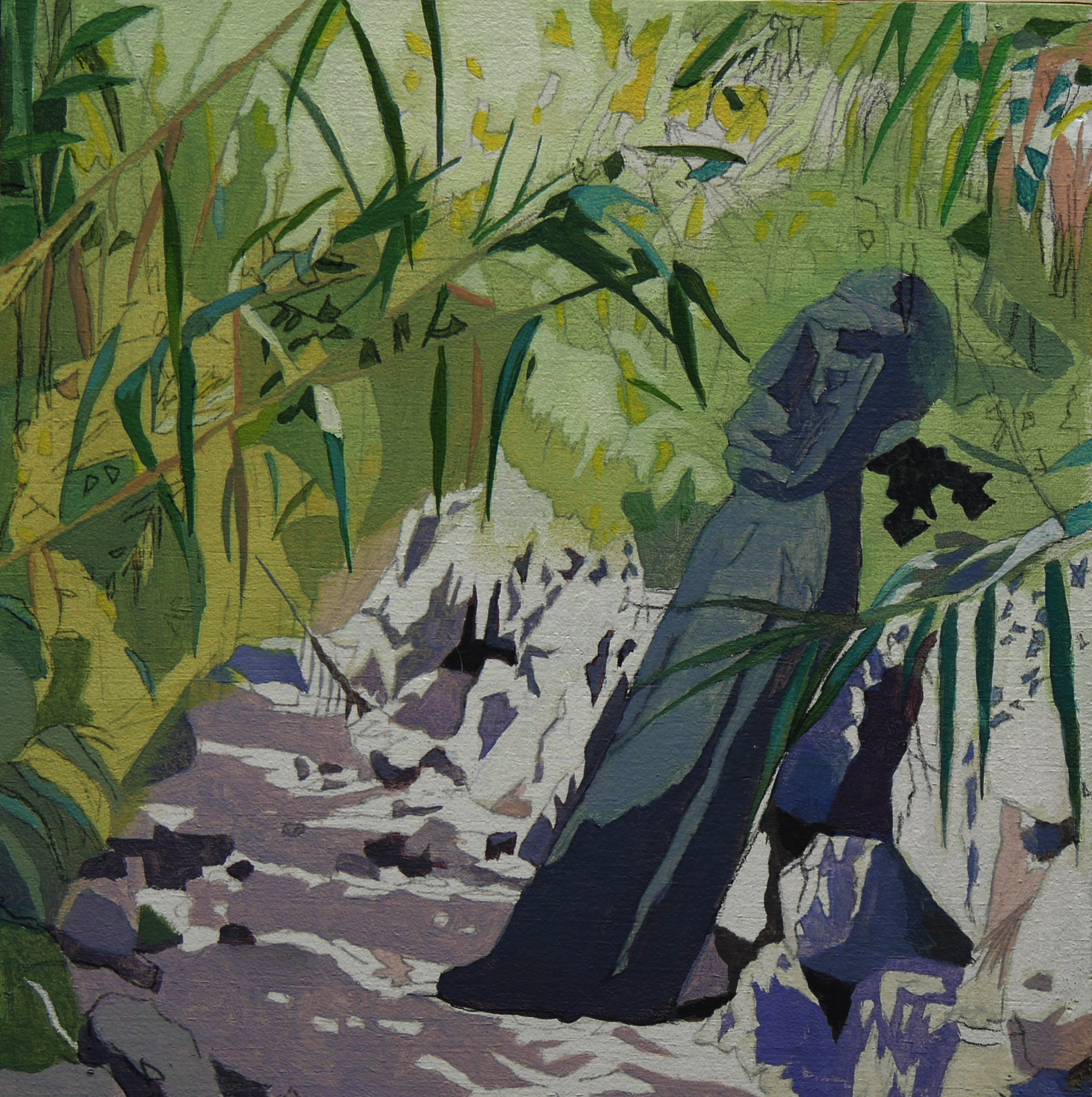
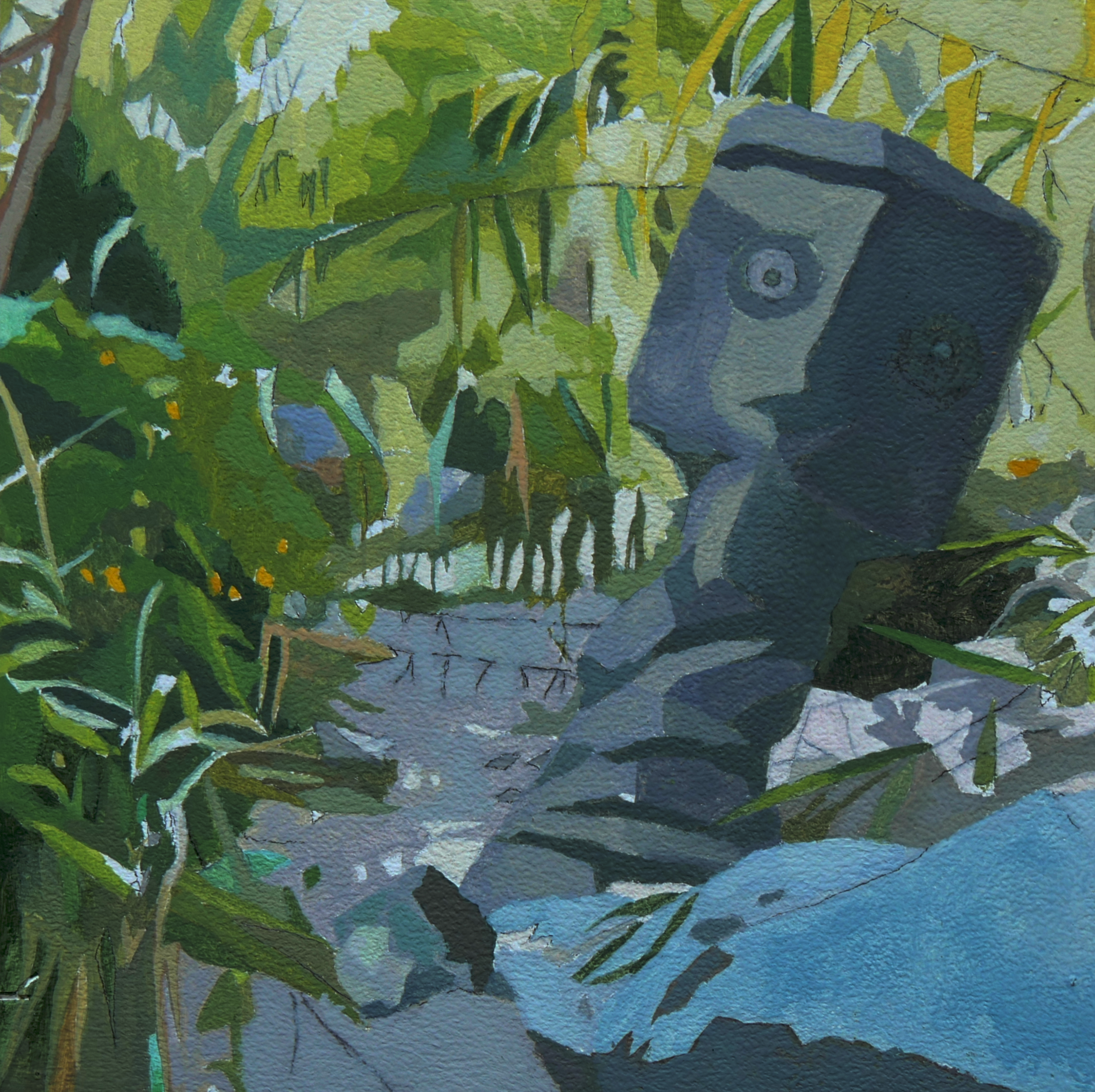
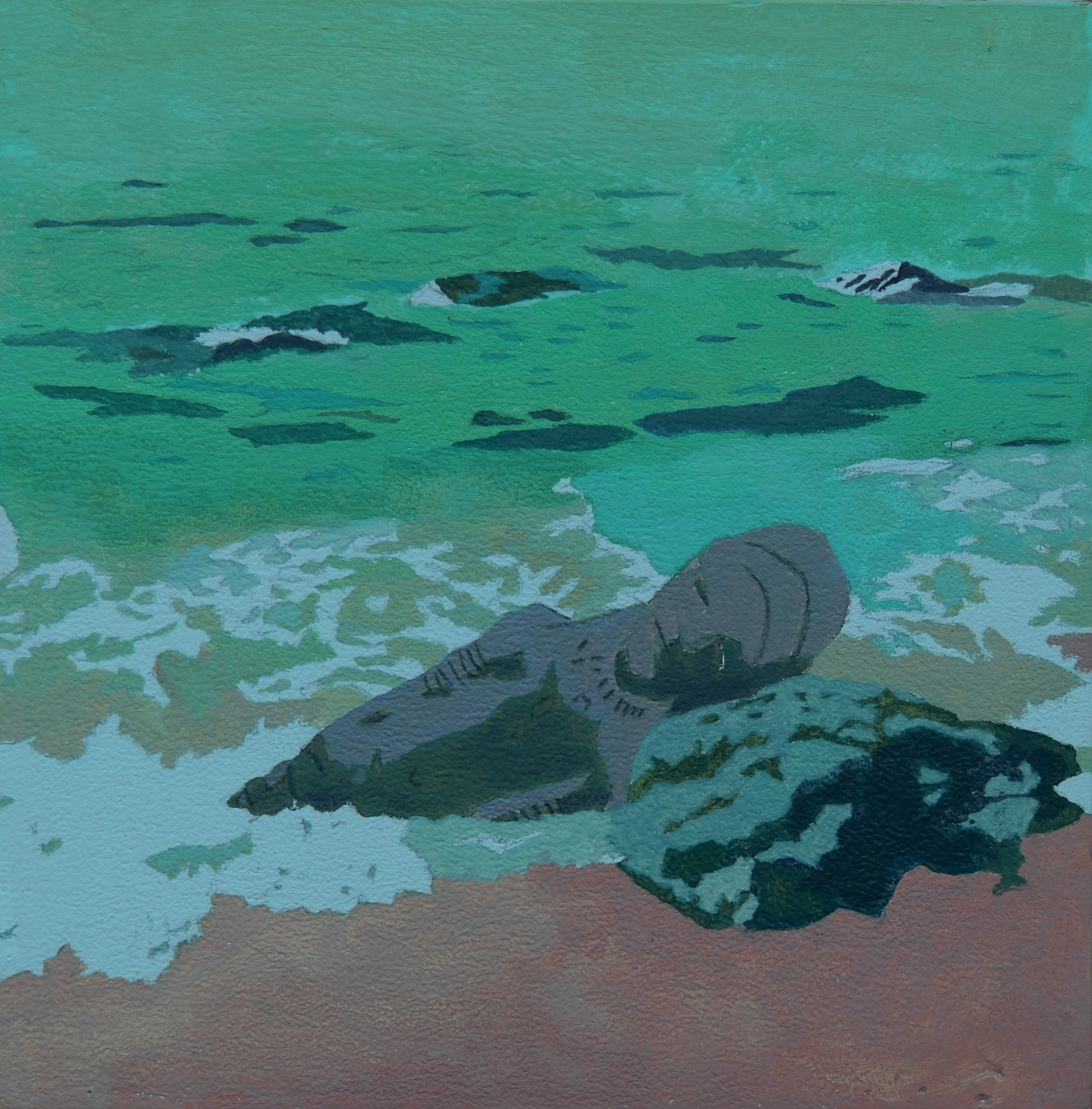
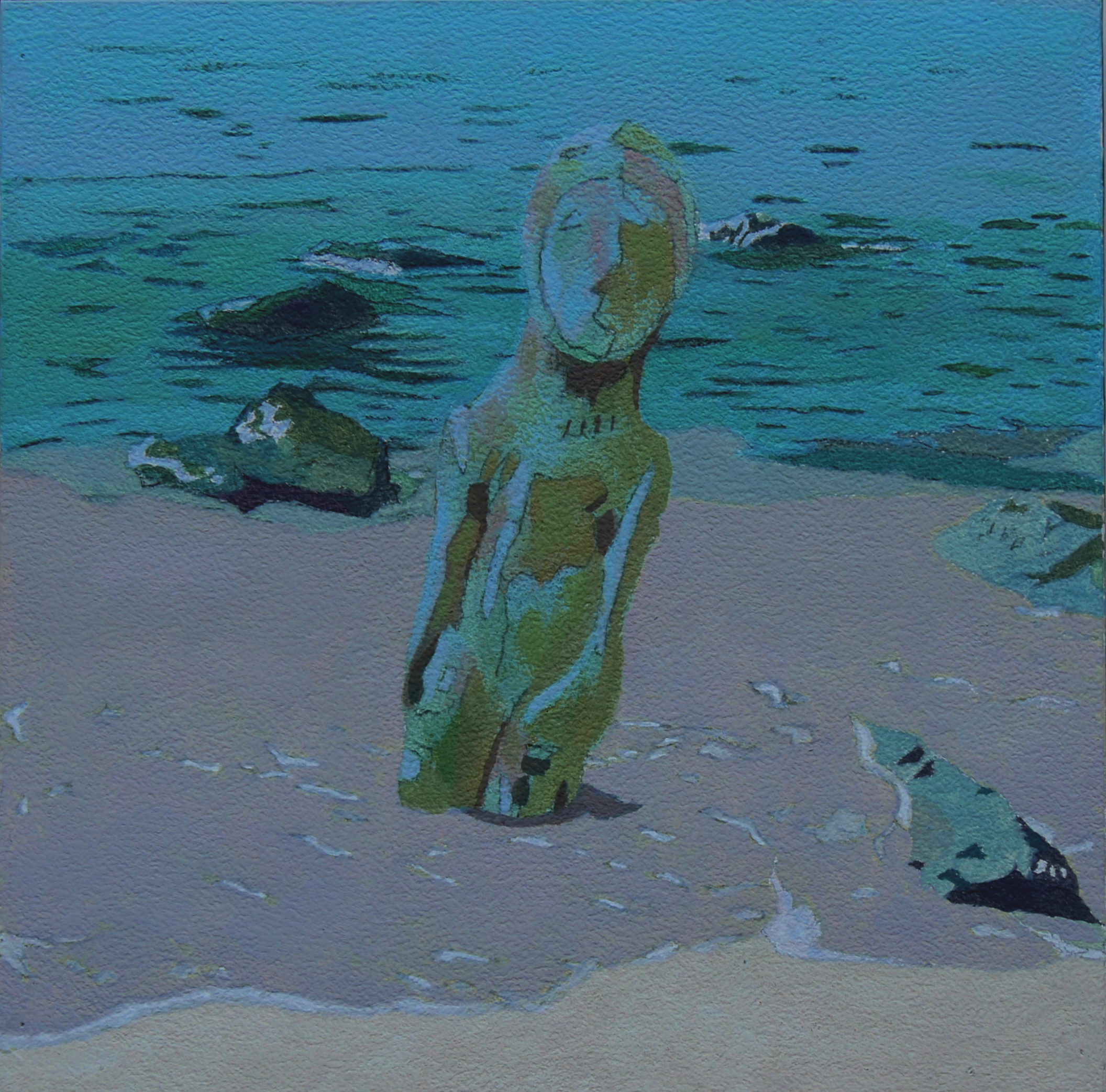
“Going Tiki” is a sequel from the project “Sauló and the cosmic journey” (Joe Dart 2022) “Going Tiki” shows us the way Cabrera de Mar stream (Maresme) until it reaches the Mediterranean Sea. The author invites us to contemplate the scenes and elements that appear in that stream, most of them product of erosion produced by torrential water, dragging everything in its way. Very close to that stream there is an Iberian settlement that it is also affected by those torrential waters. Heavy storms happen every now and then. Given that situation, the author captures spaces along that stream where we can spot scultural figures that have been displaced from their original place by the torrent water and we find them placed within the stream course until they reach the Mediterranean Sea. The author shows us some carved figures that can reming us of Polynesian Moais-Tikis, most of them surrounded by jungle vegetation. Those spaces represented in oil paint are real places from Cabrera de Mar stream and the figures are reproductioins of authentic Iberian votive offerings that the author has increased in scale.
As we mentioned before "Going Tiki" emerges as a fascinating sequel of the project "Sauló and the cosmic journey." In this new exploration, we are guided along the Cabrera de Mar river in Maresme, witnessing the dominant influence of torrential water that has sculpted and shaped the landscape dramatically. From this vantage point, we are invited to immerse ourselves in the contemplation of the scenes and elements that arise in the riverbed, many of which are the direct result of the powerful erosion of water, sweeping everything in its path.
The proximity of this riverbed to the ancient Iberian village of Cabrera adds a historical and cultural dimension to the work. The torrential waters, affecting both the riverbed and the village itself, intriguingly connect the past and present in a dynamic dance of transformation and adaptation.
The narrative takes a particularly evocative turn when Dart introduces us to sculptural figures reminiscent of Polynesian Moais-Tikis, displaced from their original locations by the force of the water. These sculptures, now stationed along the course of the river, become silent witnesses to the interaction between nature and human creativity.
The choice to depict these carved figures amidst lush and wild vegetation adds a layer of mysticism and a connection to nature. The adaptation of authentic Iberian ex-votos on an enlarged scale highlights the author's ability to reinterpret and amplify cultural elements in his work, offering a unique and contemporary perspective.
In summary, "Going Tiki" not only captures the ephemeral beauty of the Cabrera de Mar river but also tells a profound story about transformation, the shared history between man and nature, and the creativity that arises from this interaction. The fusion of geographical, historical, and artistic elements gives the work a richness and complexity that invites reflection and appreciation of the intrinsic connection between humanity and its environment.
Alexander Les Sucres